Best Native Plants for Driftless Biodiversity
Table of Contents
- Why the Driftless Area Is a Biodiversity Hotspot
- Best Native Plants for Driftless Biodiversity: Flowers and Grasses
- Pollinator-Friendly Native Plants for Every Bloom Time
- Native Plant Gardening Best Practices for Steep Slopes and Karst Topography
- Deer-Resistant Native Plants and Invasive Species Removal
- Designing with Native Plants: Pairings for Beauty and Biodiversity
- Conclusion
- Frequently Asked Questions
Last Updated: September 11, 2026
Why the Driftless Area Is a Biodiversity Hotspot
The Driftless Area is a 24,000-square-mile region of the Upper Midwest that escaped the last continental glaciation, leaving steep bluffs, spring-fed valleys, and a concentration of native species found almost nowhere else. This guide from Firefly Farm and Mercantile covers the best native plants for Driftless biodiversity, from prairie wildflowers to slope-holding grasses.
That unglaciated terrain matters. Karst topography creates cold microclimates and isolated pockets where indigenous flora survived while surrounding regions were scoured flat, one of the few places where dry-mesic prairie remnants still exist on original soil.
Planting native perennials here isn't decoration. It's repair work.
U.S. Geological Survey overview of the Driftless Area
Best Native Plants for Driftless Biodiversity: Flowers and Grasses
The strongest performers here are drought-tolerant prairie perennials that tolerate clay, sand, and limestone-derived soils, delivering nectar, seed, and cover for wildlife.
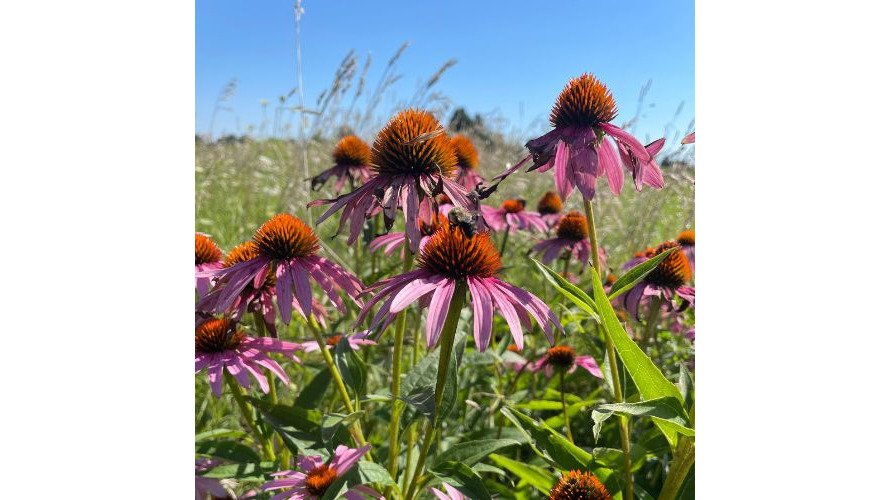
Purple Coneflower: The Butterfly Magnet
Purple Coneflower (Echinacea purpurea) is the most widely planted prairie native: it tolerates clay, reaches 3-4 feet, blooms July through September, is hardy to zone 4, and draws butterflies, birds, and beneficial insects all season.
One caveat. It develops a taproot and resents transplanting, so direct-sow or start it indoors 8-10 weeks before last frost. USDA PLANTS database profile for Echinacea purpurea
Our Purple Coneflower - Prairie Native ships at $3.00 for 250 seeds.

Black-Eyed Susan: Easy Blooms for Any Soil
Black-Eyed Susan (Rudbeckia hirta) is the easiest prairie flower to establish, throwing hundreds of blooms from summer into fall. This self-seeding biennial is hardy to zone 3, performs better in poor soil, and holds 6-10 days as a cut flower.
Little Bluestem and Big Bluestem: Grasses That Feed and Shelter
Little Bluestem is arguably the most popular native grass in the country: blue-green foliage that turns copper-red in fall, cover for beneficial insects, and a workhorse for erosion control on slopes. Hardy to zone 3.
Big Bluestem is the giant of the pair, reaching 3-8 feet and turning red-copper after first frost. It thrives in nearly any soil except standing water and tolerates drought. Together they form the backbone of a prairie planting.
Milkweed: Essential Host Plants for Monarchs
Milkweed is the only plant group monarch caterpillars can eat, making it non-negotiable in any pollinator habitat. Three species suit different Driftless conditions:
- Red Milkweed (Asclepias incarnata): prefers moist, rich soils; vanilla-scented blooms in June and July
- Butterflyweed (Asclepias tuberosa): dry, sandy, well-drained ground; orange blooms for 4-6 weeks
- Showy Milkweed (Asclepias speciosa): spreads into dense patches with minimal upkeep; ideal for rain gardens
All three are cold-stratified seed. Sow them early while it's still cold, or refrigerate for 21 days before starting indoors.
New England Aster and Wild Bergamot: Late-Season Nectar
New England Aster delivers pink-purple blossoms in late summer and early fall, one of the few nectar sources still standing after frost. Bees, butterflies, and birds depend on it, and average soil, clay, or sand all work.
Wild Bergamot, also called Bee Balm, is beloved by bees, butterflies, and hummingbirds. It reaches 4-5 feet, grows from prairie to forest edge, and doubles as a tea and cut flower.
Pollinator-Friendly Native Plants for Every Bloom Time
Pollinator-friendly native plants work best when bloom times overlap across the whole growing season. A garden that peaks in July and goes quiet in September starves its insects for half the year.
| Bloom Window | Species | Pollinators Served |
|---|---|---|
| Early summer | Butterflyweed, Red Milkweed | Monarchs, bees, hummingbirds |
| Midsummer | Purple Coneflower, Black-Eyed Susan | Butterflies, birds, beneficial insects |
| Late summer | Wild Bergamot, Showy Milkweed | Bees, hummingbirds, moths |
| After frost | New England Aster | Late butterflies, bees, seed-eating birds |
The practical takeaway: plant at least one species from each row to build an ecological corridor rather than a seasonal display.
Native Plant Gardening Best Practices for Steep Slopes and Karst Topography
Most native-plant guides assume a flat yard. In the Driftless Area, the yard is often a 20- to 40-percent grade of loess-capped limestone, and every technique has to account for gravity and for water that disappears into bedrock instead of running off. gifts for nature lovers.
Read the slope before you touch it
Slope angle drives every other decision. To estimate it, hold a level at eye height with one end pointed upslope and measure the vertical gap at the downhill end: a gap of one-quarter the level's length is about a 25-percent slope, half the length roughly 50 percent. Anything above 20 percent needs erosion control from day one; above 35 percent is usually better planted with plugs and live stakes than seed.
Aspect matters just as much. South- and west-facing slopes run hot and dry and favor drought-adapted species like Butterflyweed, Little Bluestem, and Purple Coneflower. North- and east-facing slopes stay cooler and moister, supporting Wild Bergamot, Red Milkweed, and New England Aster. A single hillside can hold two or three microclimates, so treat it as zones rather than one bed.

Site preparation that actually holds soil
- Smother, don't till. Cardboard topped with 3-4 inches of weed-free straw kills cool-season turf and most shallow-rooted invasives over one growing season. On a slope, lay the cardboard in overlapping shingles with the overlaps pointing uphill so water runs over the seams instead of lifting them.
- Solarize only on gentle ground. Clear plastic works on slopes under about 15 percent. On steeper ground it slides, tears, and traps condensation that can rot seedlings.
- Hold the surface with a nurse crop. Sowing a fast annual, oats in spring, winter rye in fall, at roughly 2-3 pounds per 1,000 square feet knits the top inch together while perennials root, then dies back without competing the following year.
- Seed or plug on contour. Lay out rows that follow the hillside's natural contour, not straight up and down. Contour rows act as tiny terraces: they slow sheet flow, trap seed, and give roots a stable shelf. On severe slopes, a shallow hand-dug diversion ditch on contour every 15-20 feet catches runoff before it becomes a gully.
- Mulch with straw, never wood chips. Straw holds moisture and lets seedlings push through; wood chips mat down, shed water, and smother the seedlings you are trying to establish.
- Water the first season, then stop. New plugs need roughly an inch of water per week for the first 6-8 weeks. After roots reach subsoil, most Driftless natives are on their own.
Karst changes the rules
Karst topography means the bedrock below you is riddled with fractures, sinkholes, and losing streams; water entering those fractures can travel miles underground and reappear at a spring. Two consequences:
- Anything soluble on the surface can end up in groundwater. Skip soluble fertilizers, and use herbicides only as a last resort, spot-treated, and never within 50 feet of a sinkhole, spring, or losing stream.
- Sinkholes are not planting beds. Keep them vegetated with deep-rooted natives to filter runoff, but do not fill them or pile mulch or compost in them.
A realistic first-season timeline
- Year 0, spring-fall: smother or solarize; identify and cut invasives.
- Year 0, late fall or Year 1, late spring: sow warm-season grasses and nurse crop, or set plugs on contour.
- Year 1: water plugs through the first 6-8 weeks; expect mostly green mulch and a few blooms.
- Year 2: grasses fill in; coneflower and black-eyed susan start to flower.
- Year 3: the planting reads as a prairie, when most people finally believe it worked.
If you are starting from bare, eroded ground, our Little Bluestem - Prairie Native and Big Bluestem - Prairie Native are the two workhorses for holding a slope while the forbs establish. Pair them with a forb mix from our Prairie Native Wildflower Collection so the slope has both structure and bloom from the first full season.
Deer-Resistant Native Plants and Invasive Species Removal
Deer pressure is the single biggest reason native plantings fail in this region. A hillside of tender coneflower seedlings can be browsed to the ground in a single night, and a buck rubbing a young oak can girdle it in seconds. Deer avoid plants that taste bitter, smell strong, or feel fuzzy or tough, and browse hardest in late winter and early spring.
Why deer avoid certain natives
Three mechanisms do most of the work:
- Aromatic oils and resins. Wild Bergamot, New England Aster, and most mints and sages carry volatile compounds that make foliage unpalatable.
- Milky sap and fuzzy texture. Butterflyweed and other milkweeds exude an irritating, bitter latex; the fuzzy stems and leaves of many asters and goldenrods also deter.
- Tough, fibrous foliage. Warm-season grasses like Little Bluestem and Big Bluestem have silica-rich blades that wear on teeth, so deer graze them lightly and prefer tender cool-season turf.
A working deer-resistant matrix
Build the backbone of a Driftless planting from species deer reliably leave alone, then tuck the vulnerable favorites into protected pockets.
Reliable backbone (low browse pressure):
- Butterflyweed (Asclepias tuberosa)
- Wild Bergamot (Monarda fistulosa)
- New England Aster (Symphyotrichum novae-angliae)
- Little Bluestem (Schizachyrium scoparium)
- Big Bluestem (Andropogon gerardii)
- Showy Milkweed (Asclepias speciosa), deer browse the pods occasionally but leave the foliage
High-pressure favorites (protect these):
- Purple Coneflower buds and young foliage
- Black-Eyed Susan blooms
- Red Milkweed and other soft-stemmed milkweeds
- Young oak, maple, and dogwood saplings, which are rubbed and browsed year-round
Realistic protection, not wishful thinking
No plant is truly deer-proof when pressure is high. The strategy that works is layered:
- Plant in drifts, not singles. A single coneflower is a snack; a 5-plant drift with grass around it is a meal deer have to work for.
- Fence the vulnerable zone. A 6- to 8-foot woven-wire fence around the highest-value bed is the only reliable barrier. Electric fencing on a single strand at 30 inches and another at 48 inches works well for perimeter protection.
- Use repellents on a rotation. Switch products every few weeks so deer do not habituate. Apply in late winter and early spring, when browse pressure peaks.
- Protect trunks, not just tops. Wrap young trees with hardware cloth or tree tubes from ground to at least 4 feet to stop buck rub and vole damage.
- Accept some loss. A planting that loses 10-15 percent of its forbs to deer is still functioning habitat.
Invasive species identification and removal
Removing invasive species matters as much as planting. Invasives don't just compete for light and water; several change soil chemistry and disrupt the mycorrhizal networks native plants depend on. Garlic mustard, for example, releases compounds that suppress the fungi native seedlings need.
Watch for these in the Driftless region:
- Garlic mustard (Alliaria petiolata): kidney-shaped leaves, garlic smell when crushed, white four-petaled flowers in spring. Pull by hand before seed set; a single plant can drop hundreds of seeds.
- Common buckthorn (Rhamnus cathartica): glossy oval leaves, thorny twigs, stays green late into fall. Cut and immediately treat the stump, or it resprouts.
- Japanese knotweed (Fallopia japonica): bamboo-like stems, heart-shaped leaves, dense colonies along waterways. Cutting alone makes it worse; repeated cutting plus smothering over multiple seasons is the realistic approach.
- Reed canary grass (Phalaris arundinacea): tall, coarse grass in wet areas, dominates springs and seeps. Mow aggressively in early summer, then smother and replant with native sedges and warm-season grasses.
Pull small infestations by hand when soil is moist. For established stands, cut and smother for at least three seasons, then seed bare ground immediately with native grasses or something worse moves in.
National Invasive Species Information Center species profiles
If you are clearing a slope or a wet seep and want to replant immediately, our Prairie Native Wildflower Collection and Milkweed Collection give you a seed mix that establishes fast enough to hold the ground while the slower perennials root.
Designing with Native Plants: Pairings for Beauty and Biodiversity
Native plantings don't have to look like a research plot. A few deliberate pairings give structure and color while keeping the ecology intact.
- Purple Coneflower + Little Bluestem: magenta blooms against blue-green grass, both drought-tolerant
- New England Aster + Big Bluestem: late purple over copper-red, the classic fall prairie combination
- Butterflyweed + Black-Eyed Susan: orange and gold, both happy in dry, poor soil
- Wild Bergamot + Showy Milkweed: hummingbird and monarch magnets in one bed
Repeat these pairings in drifts of three to five plants rather than scattering singles. Drifts read as intentional design, and pollinators find them faster.
Conclusion
The hardest part of native plant gardening isn't choosing species. It's starting with ground that's been compacted, eroded, or overtaken by invasives, and staying patient through the first two seasons while roots establish.
Firefly Farm and Mercantile carries prairie-native seed grown for exactly this kind of work, from Purple Coneflower and Black-Eyed Susan to Little Bluestem, Big Bluestem, and three milkweed varieties. Every packet ships with planting instructions, and Andre, the owner, provides personal guidance and expertise if you're unsure what fits your slope, soil, or zone.

Start with one bed this season. Seed it, smother the invasives, and let the prairie do the rest.
Xerces Society pollinator habitat guidance
Frequently Asked Questions
What are the best native plants for supporting local pollinators?
Milkweed (Red, Showy, and Butterflyweed) is essential for monarchs, while Purple Coneflower, Black-Eyed Susan, New England Aster, and Wild Bergamot provide nectar from summer through fall. Little Bluestem and Big Bluestem offer cover and nesting sites. Plant in clusters of three or more to create a pollinator-friendly habitat that supports bees, butterflies, and hummingbirds across the Driftless Area.
How do native plants contribute to soil health in the Driftless Area?
Deep-rooted natives like Big Bluestem and Little Bluestem stabilize steep slopes and reduce erosion in the Driftless Area's karst topography. Their roots improve water infiltration, build organic matter, and support beneficial soil microbes. Unlike shallow lawn roots, these plants cycle nutrients and help prevent runoff into local watersheds, making them ideal for rain gardens and erosion-prone sites.
Which native perennials are most drought-tolerant for steep slopes?
Butterflyweed, Purple Coneflower, and Little Bluestem thrive on dry, well-drained slopes. Butterflyweed prefers sandy soils and full sun, while Little Bluestem's deep roots hold soil in place. Big Bluestem also tolerates drought once established. For steep Driftless slopes, plant these species together to create a resilient, low-maintenance cover that supports pollinators and wildlife.
How can I integrate heirloom seeds with native plantings?
Pair native perennials with heirloom annuals like zinnias or cosmos for extended bloom. Use native grasses as a backdrop and interplant heirloom flowers in gaps. Firefly Farm and Mercantile offers both native seeds and heirloom varieties, so you can design a garden that supports biodiversity and reflects your personal style. Start small, then expand as you learn what thrives in your microclimate.


