How to Attract Solitary Bees to Your Garden
Table of Contents
- Why Solitary Bees Deserve a Spot in Your Garden
- Creating a Native Bee Nesting Habitat
- The Best Flowers for Solitary Bees
- Frequently Asked Questions
Last Updated: September 9, 2026
Why Solitary Bees Deserve a Spot in Your Garden
Honey bees get the headlines, but native solitary bees, including mason bees and leafcutter bees, are the unsung workhorses of pollination. Unlike honey bees that live in large hives, solitary bees are cavity-nesting insects where each female builds her own nest, often in hollow stems, dead wood, or tunnels in the ground.
Native pollinators work hard in gardens, and the results can be remarkable. A single mason bee can visit thousands of flowers in a day, and research from the USDA Native Bee Research confirms that native bees are often more effective pollinators than honey bees for many crops. Learning how to attract solitary bees to your garden is one of the highest-impact changes a home gardener can make for local biodiversity.
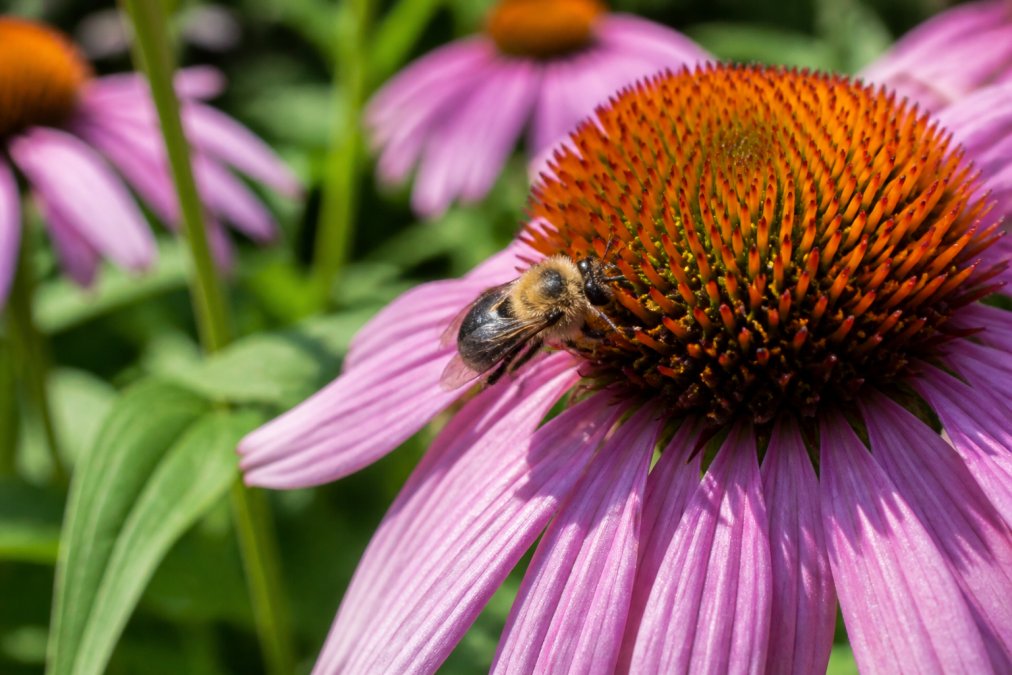
Creating a Native Bee Nesting Habitat
To attract solitary bees, you need to think beyond flowers and consider shelter. A bee hotel filled with bamboo tubes, phragmites reeds, or drilled wood blocks provides the cavity-nesting habitat these bees seek.
Place your bee hotel facing south or southeast, three to six feet off the ground, and replace the tubes or clean the hotel each spring (xerces.org).
The Best Flowers for Solitary Bees
The best flowers for solitary bees are pollen-rich and nectar-rich varieties that bloom across the entire season. Native plants are particularly valuable because solitary bees have co-evolved with them, but a well-chosen mix of heirlooms and open-pollinated annuals works beautifully too.
Our Bee Feed Flower Mix provides nectar and pollen to wild bees, honey bees, and other pollinators. For broader native pollinator support, the Bumblebee Buffet Seed Mixture attracts many bumble bee species with adaptable native species and garden favorites.

Flower Mix | Best For | Key Features | Price |
|---|---|---|---|
Wild bees and honey bees | Annual and perennial blend, nectar and pollen rich | $3.50 | |
Honey Bee Flower Mixture | Honey bee health | All-season bloom, adaptable varieties | $3.00 |
Bumblebee Buffet Mixture | Bumble bee species | Native species, home garden scale | $3.00 |
Plant a dedicated pollinator patch in a sunny spot, sowing in early spring or late fall, and plan for blooms from early spring to hard frost.
Plant your pollinator patch in drifts of at least three square feet rather than tiny scattered clumps. Native bees are efficient foragers and will work a dense patch far more thoroughly than isolated plants scattered across the landscape.
For those who want to attract solitary bees with regionally appropriate plants, the Xerces Society Pollinator Conservation Resources offers detailed guidance on native plant selection by ecoregion. Pairing a solid nesting habitat with the right flowers transforms a garden into a refuge for these essential native pollinators. Supporting solitary bees means supporting the entire garden ecosystem, from the soil to the birds that depend on the insects.
Attracting solitary bees comes down to three essentials: providing cavity-nesting habitat, keeping the garden pesticide-free, and planting a steady supply of pollen-rich and nectar-rich flowers. Firefly Farm and Mercantile makes the planting part easy with research-backed seed mixes like the Bee Feed Flower Mix and the Bumblebee Buffet. Get started with Firefly Farm and Mercantile and turn your garden into a haven for native pollinators this season.
Frequently Asked Questions
What attracts solitary bees to a garden?
To attract solitary bees, provide three essentials: a native bee nesting habitat, a steady supply of pollen and nectar, and a pesticide-free environment. Unlike honey bees, solitary bees nest in hollow stems, bare soil, or small tunnels. Leave dead wood and brush piles in place, install a bee hotel in a weather-sheltered spot, and plant clusters of pollen-rich flowers that bloom across the season.
What are the best flowers for native solitary bees?
The best flowers for solitary bees are open, single-petal blooms rich in nectar and pollen. Native wildflowers like coneflowers, asters, goldenrod, and bee balm are excellent choices. A pre-mixed option like Firefly Farm's Bee Feed Flower Mix combines annuals and perennials selected for pollinator appeal, giving you a simple way to support local bee populations.
Do solitary bees need a bee hotel?
Many solitary bees are cavity-nesting and will use a bee hotel, but they are picky about location. Hang it 3 to 6 feet off the ground facing south or southeast to catch morning sun, and place it near mud or damp soil that mason bees use for nest building. Keep it protected from rain, and clean or replace the nesting tubes each year to prevent parasite buildup.


