How to Tell if Seeds Are Still Good
Table of Contents
- Understanding Seed Viability and Why It Matters
- The Water Test: A Simple Float Test for Seeds
- The Paper Towel Germination Test: Testing Seed Viability
- Visual Signs of Seed Aging and Degradation
- How Long Do Garden Seeds Last: Storage and Longevity
- Proper Storage Conditions to Extend Seed Life
- When to Discard Old Seeds and Start Fresh
- End of Year Seed Sales: A Smart Way to Stock Up
- Conclusion
Last Updated: August 30, 2026
Understanding Seed Viability and Why It Matters
A viable seed contains a living embryo capable of germinating under the right conditions. Seeds don't simply flip from "alive" to "dead" overnight, they gradually lose vigor over time. A seed might still germinate but produce weaker seedlings that struggle to establish. Testing before planting saves garden space, time, and frustration.
At Firefly Farm and Mercantile, we work with gardeners who source heirloom and open-pollinated seeds carrying stories spanning generations. Knowing how to assess seed viability ensures those stories continue in your garden. The longevity of seeds varies dramatically by species. Some seeds, like onions and parsnips, lose viability within a year or two (peer-reviewed research). Others, like beans and squash, remain viable for five years or more under proper storage. Understanding these differences separates gardeners who waste resources from those who achieve strong germination rates.
The Water Test: A Simple Float Test for Seeds
The water test, also called the float test, is the quickest way to screen seeds for basic viability. Fill a glass with room-temperature water and drop your seeds in. Seeds that sink are denser and more likely to be viable. Seeds that float are often hollow, damaged, or filled with air rather than living tissue.
A viable seed contains a developed embryo and stored nutrients, making it heavier. However, this test has limitations. Some viable seeds float due to air pockets, while some dead seeds sink. It's a screening tool, not a definitive verdict.
After the float test, remove seeds and dry them thoroughly before storing or planting. Pat them dry on a clean paper towel and let them air-dry completely. The water test works best for large seeds like beans, peas, squash, and corn. For tiny seeds like lettuce or carrots, the paper towel germination test is more practical.
The Paper Towel Germination Test: Testing Seed Viability
The paper towel germination test is the gold standard for assessing seed viability. It mimics the conditions seeds need to sprout and gives you a clear count of how many seeds will actually germinate.
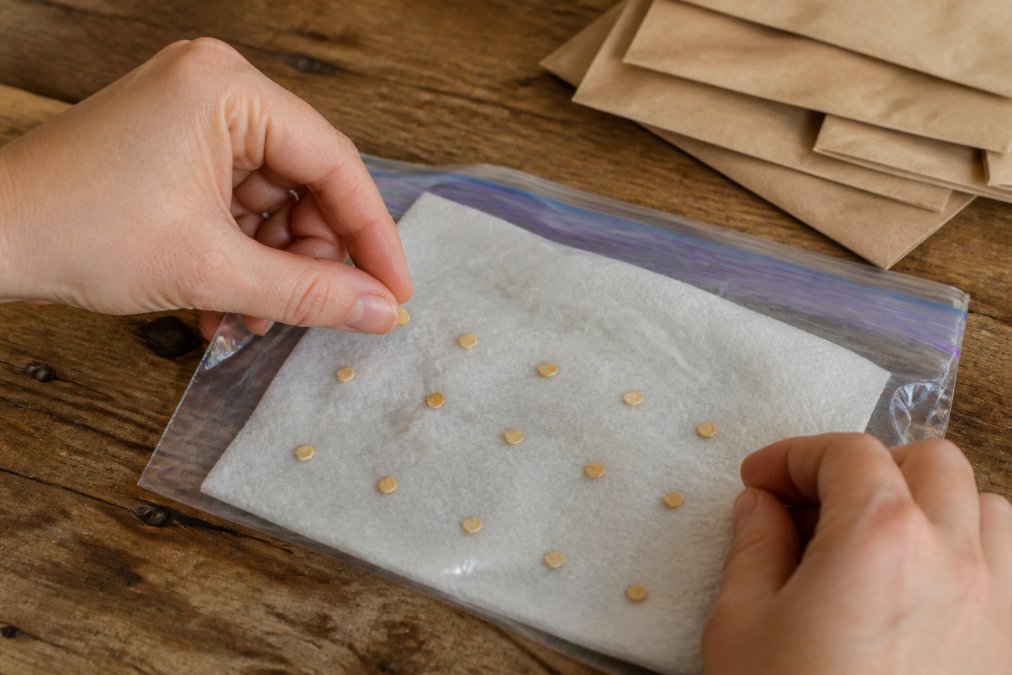
Here's the step-by-step process:
- Prepare your materials. You'll need paper towels, a plastic bag or container, and water. Coffee filters work equally well.
- Moisten the paper towel. Wet the towel so it's damp but not dripping. The towel should feel like a wrung-out sponge, moist throughout but not soggy. Over-watering is the most common mistake. If you see standing water, blot excess with a dry paper towel and reseal.
- Place seeds on the towel. Arrange them in a single layer, leaving space between each seed. Twenty seeds is a good test size.
- Roll or fold the towel. Create a loose roll that keeps seeds in contact with the damp towel while allowing air circulation.
- Seal in a plastic bag. Place the rolled towel in a zip-lock bag or container. Leave a small gap if concerned about excess condensation.
- Store in a warm location. Most seeds germinate best between 65-75°F (the CDC). A kitchen counter away from direct sunlight works well. Temperature is critical: seeds stored below 60°F or above 80°F germinate slowly or not at all.
- Monitor for sprouting. Most seeds show a root within 5-14 days. Keep checking for three weeks before concluding seeds are non-viable. A tiny white root tip emerging is germination; count any seed showing a visible radicle as germinated.
- Count your results. Calculate your germination percentage. If 16 of 20 seeds sprouted, your germination rate is 80%.
Troubleshooting common failures:
Mold or fungal growth: Open the bag immediately and discard affected seeds. Start over with a drier towel and ensure the bag isn't sealed so tightly that condensation pools. If mold returns, try a warmer, drier location.
No activity after two weeks: Check temperature first. If the room is below 65°F, move the test to a warmer location. Some seeds require dormancy-breaking treatments like cold stratification or scarification.
Seeds swell but don't produce a root: The seed coat has softened, but the embryo isn't viable. Count these as failures.
Weak, pale, or spindly sprouts: This indicates reduced vigor. The seed is germinating but exhausted. Count them as germinated, but note that your seeds are losing vigor and should be replaced soon.
This test reveals not just whether seeds will germinate, but how vigorously they sprout. If more than 20% of your seeds show weak vigor, consider replacing that seed stock.
Visual Signs of Seed Aging and Degradation
Before running a germination test, examine your seeds visually. Obvious signs of degradation can tell you whether testing is worth your time.
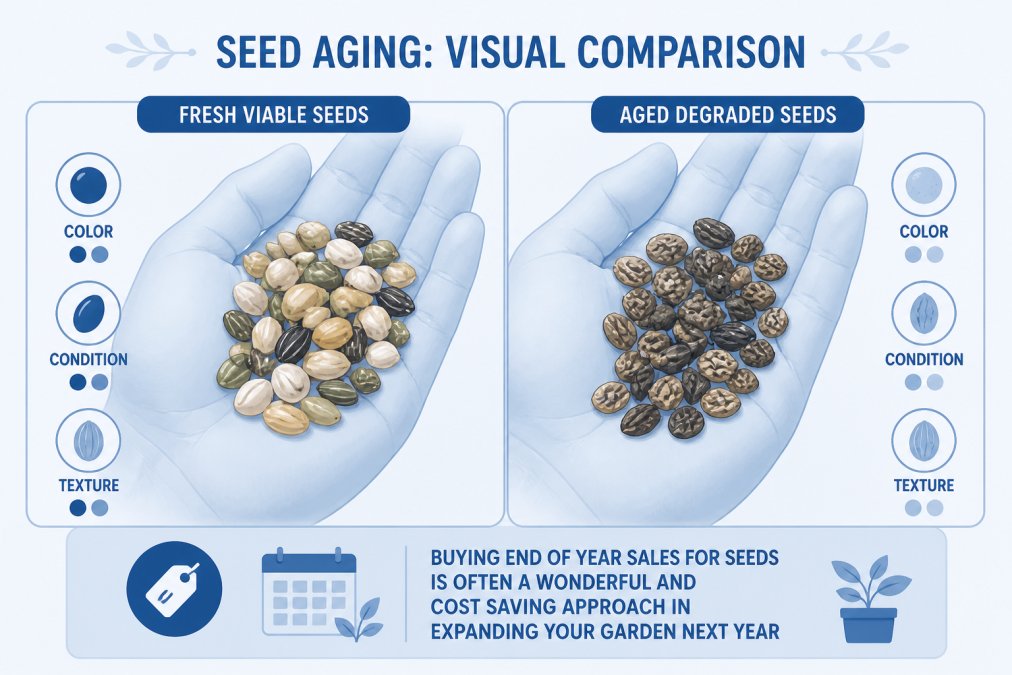
Discoloration is a clear indicator. Fresh seeds have vibrant, consistent color. As seeds age, they often develop dark spots, streaks, or a dull appearance, signaling that the seed coat has been compromised.
Shriveling indicates moisture loss. Viable seeds are plump and firm. Wrinkled or collapsed seeds have lost internal moisture, a sign the embryo has died.
Cracks or splits allow pathogens and insects to enter. A cracked seed is vulnerable to fungal infection and rot.
Mold or visible fungal growth means the seed is colonized by disease. Don't plant it.
Insect damage appears as small holes or tunnels. These seeds won't germinate.
Mushy texture when squeezed gently indicates rot. A healthy seed is hard.
These visual cues save time. If your seeds show multiple signs of degradation, discard them and start fresh.
How Long Do Garden Seeds Last: Storage and Longevity
Seed longevity varies dramatically by species, but longevity isn't fixed, it depends entirely on how seeds are stored. The same bean seed can remain viable for five years in a cool, dry basement or fail within two years in a warm garage.
The science behind seed aging:
Seeds are alive, even in dormancy. They respire slowly, consuming stored energy over time. This accelerates with heat and moisture. Every 10-degree increase in storage temperature roughly doubles the rate of seed respiration (peer-reviewed research). A seed stored at 70°F and 50% humidity loses viability far faster than the same seed stored at 40°F and 10% humidity.
Short-lived seeds lose viability quickly, even under ideal storage. Onions, parsnips, and parsley typically remain viable for only one to two years. If you're storing onion seeds from last season, germination testing is essential.
Medium-lived seeds typically last three to five years under proper storage. This category includes lettuce, spinach, peas, beans, carrots, and brassicas like broccoli and cabbage. Most home gardeners can store these for a season or two with reasonable success, but viability drops noticeably after year three.
Long-lived seeds can remain viable for five to ten years or longer. Squash, pumpkins, melons, and cucumbers fall into this group. Tomato seeds are exceptionally long-lived; properly stored tomato seeds can germinate after seven to ten years.
Heirloom and open-pollinated seeds don't follow different longevity rules than hybrids; longevity is species-specific. A heirloom tomato seed lasts as long as a hybrid tomato seed.
Species-Specific Seed Longevity
These timelines assume proper storage in a cool (32-41°F), dry (below 10% moisture), dark environment.
One to two years: Onions, parsnips, parsley, leeks, chives
Two to three years: Asparagus, okra, peppers, eggplant
Three to five years: Lettuce, spinach, chard, peas, beans, brassicas, carrots, celery, radishes, turnips, beets
Five to ten years: Tomatoes, cucumbers, melons, squash, pumpkins, corn, many flowers (zinnias, marigolds, sunflowers, cosmos)
Ten years or longer: Bachelor's buttons and sweet alyssum can remain viable for a decade or more under excellent storage.
How storage conditions affect longevity:
A seed stored in a warm garage (70°F, 60% humidity) loses viability 3-4 times faster than the same seed stored in a refrigerator (40°F, 5% humidity). A bean seed with a 5-year lifespan in ideal storage might last only 1-2 years in a warm garage. An onion seed might fail within months in poor conditions.
If you lack cold storage, a cool basement or unheated closet is your next best option. Avoid attics, garages, and spaces that experience temperature and humidity swings. Stable, cool conditions are far superior to fluctuating warm ones.
When to prioritize testing:
If your seeds are within their typical longevity window and were stored in cool, dry conditions, germination rates are usually reliable. If seeds are approaching the end of their longevity range, were stored in uncertain conditions, or were stored longer than expected, germination testing is essential before planting.
Buying end-of-year seed sales is often a wonderful and cost-saving approach to expanding your garden next year. As the growing season winds down, seed companies discount remaining inventory to clear shelf space, allowing you to stock up on fresh seeds at lower prices. Late November through December is prime time for these sales, when you can acquire current-season seeds with maximum viability ahead.
Proper Storage Conditions to Extend Seed Life
How you store seeds determines whether they'll remain viable for one year or ten. Three factors matter: temperature, moisture, and light.
Cool temperatures slow seed metabolism. Seeds stored at 40°F last significantly longer than seeds stored at 70°F. Ideally, store seeds between 32-41°F; a refrigerator or freezer is perfect. If you lack cold storage, a basement or cool closet is your next best option.
Low moisture prevents germination and fungal growth. Store seeds in airtight containers: glass jars with tight lids, plastic bins with sealed lids, or vacuum-sealed bags. Add a desiccant like silica gel to absorb residual moisture. Replace silica gel annually or when saturated.
Darkness prevents light-triggered germination. Store seeds in opaque containers or keep them in a dark location.
The ideal storage setup: An airtight container in a refrigerator or freezer with silica gel inside. Label containers with the seed variety and date. For gardeners without refrigerator space, a cool basement in an airtight container with desiccant is your best alternative. Check stored seeds occasionally for signs of moisture or mold. If you see condensation, open the container, dry the seeds thoroughly, refresh the desiccant, and reseal.
When to Discard Old Seeds and Start Fresh
At some point, stored seeds lose viability and should be discarded. Knowing when to let go saves you from wasting garden space on seeds that won't sprout.
Discard seeds if:
- They show obvious signs of degradation: mold, insects, cracks, or severe discoloration
- They're older than the typical longevity for that species and failed a germination test
- They were stored in poor conditions for an extended period
- A germination test shows less than 50% viability
Germination rates below 50% are problematic. If you test 20 seeds and only 8 sprout, planting at normal density will result in sparse, patchy growth. You'd need to plant more seeds per spot to achieve normal density, which is inefficient.
When in doubt, test before discarding. A germination test takes two weeks and costs nothing. It's worth doing rather than assuming seeds are dead based on age alone.
After discarding old seeds, refresh your supply. Buying end-of-year seed sales allows you to stock up on fresh seeds at lower prices, building a well-stocked seed collection for the coming year without straining your budget. Shop our heirloom seed collections and discover seeds that grow strong.
End of Year Seed Sales: A Smart Way to Stock Up
End-of-year seed sales are one of the best opportunities to expand your seed collection affordably. As the growing season winds down, seed companies discount remaining inventory to clear shelf space.
Why end-of-year sales matter:
Buying at year's end means you're purchasing fresh seed stock for the upcoming season with maximum viability ahead. This contrasts with buying mid-season when available inventory may have been in the warehouse longer.
Timing and strategy:
Late November through December is prime time for seed sales. Many companies offer percentage discounts on bulk orders or specific categories. Watch for sales on collections, themed seed packets bundled at a discount, which are perfect for trying new varieties affordably.
Building your seed library:
Using end-of-year sales to stock up lets you build a diverse seed collection gradually. Rather than buying everything at once, you can acquire seeds over multiple sales, spreading the cost and building a well-rounded garden library. This approach is especially valuable for heirloom and specialty seeds.
Quality considerations:
End-of-year sales don't mean you're buying old or inferior seeds. You're buying current-season inventory at a discount. As long as seeds have been stored properly by the seed company, they'll perform well.
When shopping end-of-year sales, prioritize seeds you know you'll use. Store your purchases properly, cool, dry, dark, and you'll have a reliable seed collection for years.
Conclusion
Knowing how to tell if seeds are still good separates gardeners who waste resources from those who plant with confidence. Whether you use the water test for quick screening or the paper towel germination test for detailed assessment, these simple methods take the guesswork out of planting.
Testing old seeds before planting saves space and prevents disappointment. Visual inspection catches obviously degraded seeds quickly. Understanding species-specific longevity helps you decide which seeds need testing and which can be replaced. Proper storage, cool, dry, and dark, extends the life of every seed you save.
At Firefly Farm and Mercantile, we understand that seeds are more than genetics; they're stories. Whether you're planting heirloom varieties passed down through families or discovering new open-pollinated varieties, knowing your seeds are viable ensures those stories continue growing in your garden. When you're ready to refresh your collection or explore new varieties, our curated selection of rare heirloom seeds and seasonal bulbs offers quality you can trust. Shop our heirloom seed collections and discover seeds that grow strong.
Frequently Asked Questions
How can I test if my old seeds are still good?
The easiest method is the paper towel germination test. Place seeds between damp paper towels in a sealed plastic bag at room temperature for 7-10 days. If seeds sprout, they're viable. You can also use the float test: place seeds in water for 15 minutes. Seeds that sink are more likely to be good; those that float may have low viability. Both tests reveal seed viability quickly without planting.
Are seeds still good after 10 years?
It depends on the species and storage conditions. Heirloom seeds stored in cool, dry, airtight containers can remain viable for 10+ years. Tomato and bean seeds often last 4-6 years with proper storage. However, seeds stored in warm, humid conditions lose viability much faster. Always test questionable seeds before discarding them—many older seeds retain germination ability longer than expected.
What signs show that seeds are degrading?
Watch for discoloration, mold growth, unusual odors, or a papery, brittle texture. Healthy seeds typically have uniform color and firm structure. If you notice fungal growth or musty smells, moisture has compromised the seed coat and embryo. Cracked or shriveled seeds often have poor germination rates. Visual inspection combined with a germination test gives you the clearest picture of seed health.
What is the best way to store seeds to keep them viable longer?
Store seeds in a cool, dry place—ideally 32-41°F with 20-30% moisture content. Use airtight containers like glass jars or sealed envelopes. Add silica gel desiccant packets to absorb excess moisture. Keep seeds away from light and temperature fluctuations. A basement, refrigerator, or freezer works well. Proper storage conditions can extend seed life by years, especially for heirloom and hybrid varieties.


