Planting Native Flowers for Pollinators: Bees & Butterflies
Table of Contents
- Why Native Flowers for Pollinators Outperform Ornamental Varieties
- How to Start a Pollinator Garden: A Step-by-Step Approach
- Best Native Plants for Bees: Region-by-Region Picks
- Creating Habitat: Water, Shelter, and Nesting Sites
- Pest Management Without Chemicals
- Seasonal Pollinator Garden Maintenance All Year Long
- Cost-Effective Sourcing: Native Flower Seeds That Deliver
- Conclusion
Last Updated: August 29, 2026
Why Native Flowers for Pollinators Outperform Ornamental Varieties
Native flowers for pollinators evolved alongside local bee, butterfly, and moth populations over thousands of years, making them far more effective at supporting pollinator health than ornamental hybrids. Many ornamental hybrids have been bred for visual appeal, which often means enlarged petals, reduced pollen production, or altered flower structures that native bees cannot access. Native perennials match the foraging behavior of local pollinators precisely. Their bloom timing aligns with pollinator emergence cycles, and their nectar and pollen chemistry suits the nutritional needs of native bees and other beneficial insects. Choosing native plants is the most practical decision a gardener can make for a genuinely pollinator-friendly yard.
According to the U.S. Fish & Wildlife Service pollinator conservation page, pollinators contribute to the reproduction of roughly three-quarters of flowering plants and nearly three-quarters of leading global food crops. Every native garden becomes a small but meaningful ecological corridor in a fragmented landscape.
How Host Plants Support Larval Food Sources
Most guides focus on nectar sources for adult pollinators and stop there. That's half the picture.
Host plants are species that lepidoptera rely on specifically for egg-laying and larval feeding. Monarch butterflies can only survive on milkweed species. Swallowtail caterpillars depend on plants in the carrot and parsley family. Without these larval food sources, adult butterfly populations cannot sustain themselves regardless of how many nectar-rich blooms you plant.
Include at least two or three host plants alongside your nectar sources and you're supporting the full lifecycle, not just the adult stage.
How to Start a Pollinator Garden: A Step-by-Step Approach
Starting a pollinator garden doesn't require a large property or expertise. Follow this straightforward sequence:
Step 1: Assess your site conditions. Note sun exposure (six or more hours daily for best results) and soil drainage.
Step 2: Choose a location and size. Start small, a 4x8 foot bed produces real results, especially in suburban areas where native habitat is scarce.
Step 3: Remove existing turf or weeds. Sheet mulching with cardboard and compost is an effective, chemical-free method that improves soil while suppressing competition.
Step 4: Select your plants. Prioritize native perennials for long-term structure and annuals for first-year color. A seed mixture designed for pollinators takes much of the guesswork out of plant selection.

Bumblee Buffet Flower Seed Mixture
Step 5: Sow or transplant. Direct sowing works well for most native wildflowers. Follow seed packet timing for your hardiness zone.
Step 6: Water during establishment, then step back. Once established, most native plants are drought-tolerant and need minimal intervention.
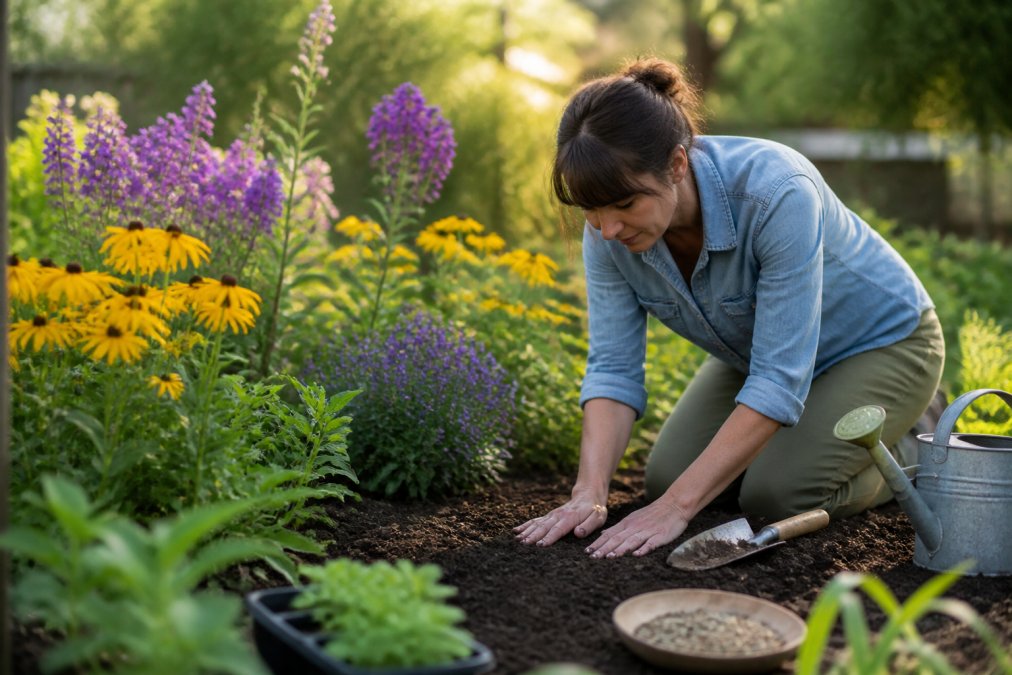
A gardener kneeling in a sunny backyard garden bed, pressing wildflower seeds into rich dark soil with their hands, surrounded by blooming native flowers in purple and yellow
Designing Your Layout for Blooming Succession
Blooming succession, planning your garden so something is always flowering from early spring through late fall, is the single most important design principle for pollinator conservation. A garden that peaks in July and goes dormant by August leaves pollinators without resources during critical late-season foraging periods.
A practical approach:
- Early spring (March-April): Native violets, wild columbine, golden Alexanders
- Late spring (May-June): Wild bergamot, native lupine, spiderwort
- Summer (July-August): Purple coneflower, black-eyed Susan, native milkweeds, bee balm
- Late season (September-October): Native asters, goldenrod, ironweed
Goldenrod and native asters bloom when most other flowers have faded and provide critical pollen sources for bumblebee queens building winter reserves and for migrating monarchs.
Container Gardening for Pollinators
Container gardening for pollinators is an underrated approach for balconies, patios, and small urban yards. Choose large containers (at least 12 inches deep) with well-draining potting mix amended with compost. Prioritize compact native species: native purple coneflower, dwarf wild bergamot, native black-eyed Susan, and annual native sunflowers all perform well in containers. Group three or more containers together to create a visible foraging patch.
A seed mixture combining annuals and perennials works particularly well for containers because annuals provide first-season color while perennials establish for future years. Our Bumblebee Buffet Seed Mixture was designed with this versatility in mind, combining adaptable native species.
Best Native Plants for Bees: Region-by-Region Picks
The best native plants for bees are those that evolved within the same geographic region as the bee species you want to support. A plant native to the Southeast may provide little benefit to pollinators in the Upper Midwest because the co-evolutionary relationship isn't there.
Region | Top Native Plants for Bees | Bloom Season |
|---|---|---|
Upper Midwest / Great Lakes | Wild bergamot, purple coneflower, goldenrod, native sunflowers | Summer-Fall |
Northeast | Bee balm, native asters, wild lupine, goldenrod | Spring-Fall |
Southeast | Native passionflower, ironweed, black-eyed Susan, native mints | Summer-Fall |
Pacific Northwest | Oregon grape, native penstemons, camas, native phacelia | Spring-Summer |
Southwest | Desert marigold, native salvias, globe mallow, penstemon | Spring-Fall |
Great Plains | Prairie clover, native sunflowers, wild bergamot, leadplant | Summer-Fall |
For colder climates, wild bergamot and purple coneflower are workhorses that handle cold winters, short growing seasons, and variable soil conditions. Goldenrod is often unfairly maligned as a weed, but it's one of the highest-value pollen sources in the native plant palette, supporting hundreds of native bee species.
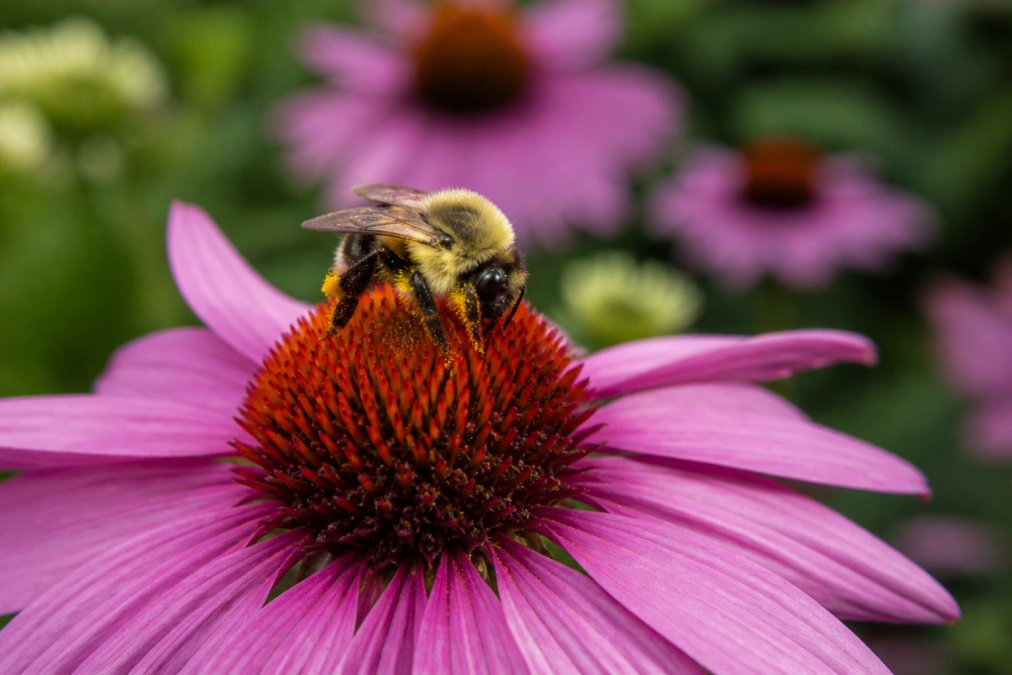
Close-up of a bumblebee collecting pollen from a bright purple coneflower bloom in a garden, soft natural light illuminating the bee's fuzzy yellow and black body against the vivid pink-purple petals
Top Native Perennials for Butterflies and Lepidoptera
Butterflies respond most strongly to tubular blooms and flat-topped flower clusters that provide stable landing platforms. Native perennials that consistently draw high butterfly activity include:
- Purple coneflower (Echinacea purpurea): Attracts swallowtails, fritillaries, and skippers; seeds feed goldfinches in fall
- Milkweed species (Asclepias spp.): Essential host plant for monarchs; common milkweed and butterflyweed are both excellent
- Native asters: Late-season nectar source for migrating monarchs
- Black-eyed Susan (Rudbeckia hirta): Reliable summer bloomer for skippers and sulphurs
- Ironweed (Vernonia spp.): Intense purple blooms in late summer that monarchs find irresistible
Our Monarch Butterfly Garden Flower Seed Mixture includes 15 flower varieties specifically chosen to address the documented loss of milkweeds and nectar sources contributing to monarch population decline. For broader lepidoptera support, the Butterfly Flower Mixture contains nine species that serve as larval host plants for brushfoots, monarchs, skippers, sulphurs, and swallowtails.


Creating Habitat: Water, Shelter, and Nesting Sites
Nectar and pollen sources are the foundation, but a truly functional wildlife habitat requires three additional elements: water, shelter, and nesting sites.
Time to Plant - Our Most Loved Wildflower Blends →
Water: A shallow dish with pebbles provides safe drinking and basking areas for butterflies without drowning risk. Change the water every two to three days to prevent mosquito breeding.
Shelter and basking areas: Roughly 70% of native bee species in North America nest in the ground, according to the Xerces Society's native bee conservation resources. Leave patches of bare or sparsely vegetated soil in sunny spots and avoid heavy mulching over the entire garden bed.
Nesting sites for cavity-nesting bees: Leave ornamental grass stems and hollow-stemmed perennials standing through winter rather than cutting them to the ground. A simple bundle of dried native grass stems provides immediate nesting habitat. creating pollinator zones.
Pest Management Without Chemicals
Integrated pest management in a native pollinator garden starts from a different premise: most insects are not pests. A healthy native garden hosts hundreds of insect species, and the overwhelming majority are either neutral or beneficial.
The practical approach:
- Accept some leaf damage. Caterpillars eating your host plants are the point.
- Use physical barriers for true problem pests. Row cover fabric protects seedlings from aphid pressure without chemical exposure.
- Encourage predatory insects. Native parasitic wasps, ground beetles, and lacewings control aphids naturally. They need undisturbed habitat to establish, which native plantings provide.
- Avoid broad-spectrum insecticides entirely, including "organic" options like pyrethrin, which is highly toxic to bees. The EPA's integrated pest management guidance for home gardens provides a useful framework for evaluating pest management decisions.
- Spot-treat only when necessary, using targeted methods like insecticidal soap applied in the evening when bees are not foraging.
Once established, native plant gardens require significantly less pest intervention than conventional gardens because biodiversity itself creates balance.
Seasonal Pollinator Garden Maintenance All Year Long
Seasonal maintenance looks very different from conventional garden care, and that's intentional. Work with natural cycles rather than against them.
Spring: Resist cutting everything back at the first sign of warmth. Many native bee species overwinter in hollow stems or leaf litter and don't emerge until soil temperatures are consistently above 50°F.
Summer: Deadhead selectively. Removing spent blooms on some plants extends flowering, but leave seed heads on coneflowers and black-eyed Susans, they're food sources for goldfinches. Divide overcrowded perennial clumps every three to four years.
Fall: Do not cut your garden to the ground in autumn.
Winter Care and the 'Leave the Leaves' Practice
The "leave the leaves" practice means allowing fallen leaves to remain in garden beds through winter rather than raking them up. Many butterfly and moth species overwinter as pupae or eggs in leaf litter, including the spicebush swallowtail. Bumblebee queens hibernate just below the soil surface, often under leaf cover. Hollow plant stems left standing provide overwintering sites for cavity-nesting bees.
Leave at least a 3-4 inch layer of leaves in garden beds. Shred leaves with a mower pass if concerned about smothering plants. Cut perennial stems to about 12-18 inches rather than ground level and leave them standing until late spring. You'll likely see emergence holes in the cut ends by April, evidence that the habitat is working.
Cost-Effective Sourcing: Native Flower Seeds That Deliver
Native plants are sometimes perceived as expensive, but seed-based approaches make pollinator gardening accessible at almost any budget. A single seed packet can produce dozens of plants, and many native perennials self-sow reliably once established.
The most cost-effective strategy is a curated Native Blend seed mixture rather than individual species packets. A well-designed mixture handles plant selection, combines annuals for first-year results with perennials for long-term structure, and is formulated based on actual research into pollinator preferences.
Firefly Farm and Mercantile's pollinator seed collections were developed through years of trial garden observation:
- Bumblebee Buffet Seed Mixture, formulated for bumblebee species specifically, it does contain some annuals and herbs to help feed the populations while your natives establish themeselves.
- Eastern Pollinator Native Seed Mix or our Western Pollinator Native Seed Mix is a blend of native annual and perennial for the eastern or western half of the Untied States
- Native Monarch Flower Seed Mixture, 20 native varieties addressing the specific habitat needs of declining monarch populations
- Butterfly Flower Mixture, includes nine larval host plant species for comprehensive butterfly support
When sourcing beyond seed mixtures, prioritize local native plant sales run by native plant societies, conservation districts, and botanical gardens. Plants grown from local seed stock are better adapted to regional conditions than those grown from distant sources. The Native Plant Society of the United States resources maintains a directory of regional chapters that often host annual plant sales.
Planting native flowers for pollinators is one of the most direct contributions a home gardener can make to local biodiversity and ecosystem health. Our pollinator seed collections at Firefly Farm and Mercantile take the uncertainty out of the equation, offering research-backed mixtures for bees, butterflies, and monarchs tested in real garden conditions. Shop our native flower seed collections and start building habitat that works season after season.
Frequently Asked Questions
What are the best native flowers to plant for pollinators?
Coneflower (Echinacea), black-eyed Susan (Rudbeckia), wild bergamot (Monarda fistulosa), milkweed (Asclepias), and native asters rank among the most effective choices. These plants provide nectar-rich blooms and pollen sources across spring, summer, and fall. For bees and butterflies together, a seed mixture designed around native wildflowers — like the Bumblebee Buffet or Butterfly Flower Mixture from Firefly Farm and Mercantile — gives you multiple species in one planting.
How do I choose native plants for my specific hardiness zone?
Start by identifying your USDA Plant Hardiness Zone, which divides the country into temperature bands. Plants labeled 'native' to your region evolved in those exact conditions, so they handle local winters and summers without extra intervention. Cold-climate gardeners in zones 3-5 should prioritize native perennials like prairie dropseed, wild columbine, and native asters that reliably return each year without replanting.
Do I need to avoid pesticides when planting for pollinators?
Yes. Even pesticides labeled 'organic' can harm native bees and butterfly larvae on contact. Neonicotinoids are especially damaging because they persist in pollen and nectar. Integrated pest management — using physical barriers, beneficial insects, and targeted spot treatments only when absolutely necessary — protects the pollinators your native flowers attract. Avoiding broad-spectrum sprays is the single most impactful step you can take alongside planting native flowers for pollinators.
How can I support pollinators throughout the entire growing season?
Plan for blooming succession: early spring bulbs and native willows for emerging bees, mid-season coneflowers and milkweed for monarchs and native bees, and late-season goldenrod and native asters for fall foragers. A seed mixture that combines annuals and perennials — such as the Monarch Butterfly Garden Flower Seed Mixture — covers multiple bloom windows automatically. Leaving seed heads and leaf litter through winter also provides critical overwintering habitat for native bees and Lepidoptera.
Shop Best Sellers


