Organic Pest Control for Spring Gardens: 2026 Guide
Table of Contents
- Identify Common Spring Garden Pests Before You Treat
- Organic Pest Control Options: Neem Oil, Diatomaceous Earth, and More
- DIY Organic Pesticide Recipes You Can Make at Home
- Beneficial Insects for Garden Pest Control
- Companion Planting for Pest Management
- Physical Barriers, Preventative Maintenance, and Soil Health
- Organic Pest Control Timing: A Seasonal Application Guide
- Conclusion
Last Updated: August 28, 2026
Spring arrives, and so does trouble. Organic pest control for spring gardens protects pollinators, pets, and soil health while keeping your vegetable garden productive. At Firefly Farm and Mercantile, we work with gardeners who grow heirloom and open-pollinated varieties. Below, we walk through identification, integrated pest management principles, and application timing that actually hold up across seasons.
The core argument: most gardeners reach for a product when they should first reach for knowledge. Treating without identifying the pest, applying at the wrong time, or ignoring beneficial insects can make a problem worse. The strategies here are sequenced deliberately: identification first, then biological controls, then targeted organic inputs, then prevention. While we recommend some of these strategies, we sometimes let Mother Nature battle it.. Our goal is to build resiliance in seeds, so they perform better in your garden. This is one article you will want to bookmark as you will reach for it throughout your growing season. When we intervene, our goal is to be very targeted so we affect the pest we identified as the problem. If it will compromise our beneficals, we have to ask is this treatment worth it.
Identify Common Spring Garden Pests Before You Treat
Correct identification is the single most important step in organic pest control. Walk your garden every two to three days in early spring, checking undersides of leaves, stem joints, and soil surfaces.
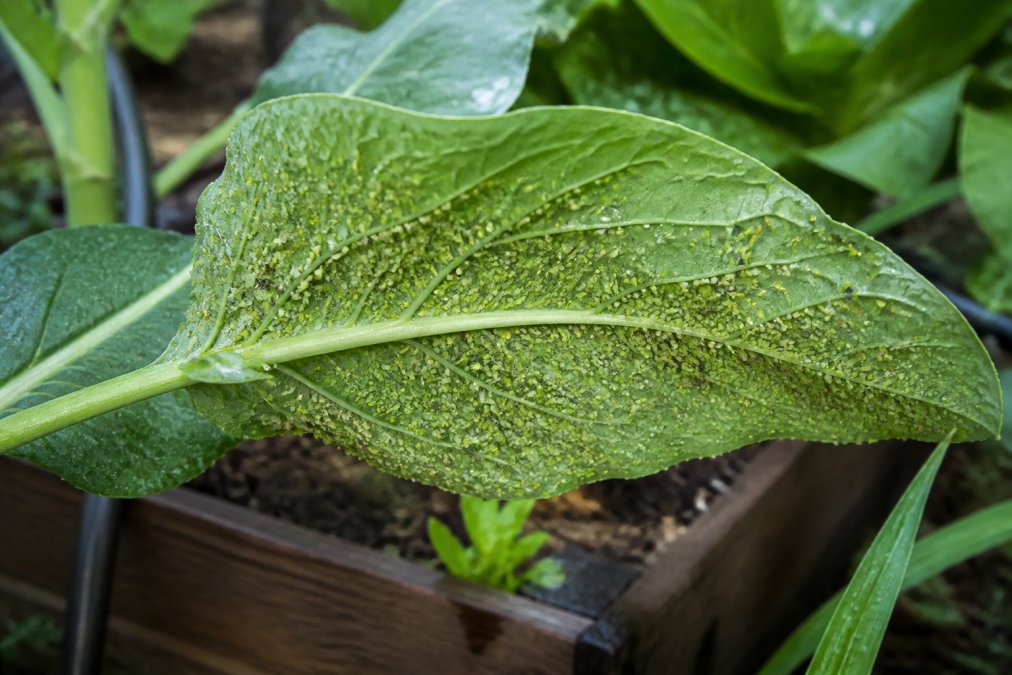
Sort pests by feeding type. Sucking insects (aphids, thrips, whiteflies) pierce plant tissue and extract sap. Chewing insects (caterpillars, Japanese beetles, squash vine borer larvae) consume leaf and stem material. Each feeding type calls for a different response.
Aphids, Thrips, and Whiteflies
Aphids are small, soft-bodied insects that cluster on new growth and leaf undersides. They reproduce rapidly in cool spring temperatures and excrete honeydew, promoting sooty mold. Heavy infestations can stunt seedlings before they establish.
Thrips leave distinctive silvery streaking on leaf surfaces and are particularly damaging to onions, peppers, and flowering plants such as dahlias. Distorted new growth is an early indicator.
Whiteflies cluster on leaf undersides and scatter in a white cloud when disturbed. They spread plant viruses and often arrive on transplants purchased from garden centers, inspect every transplant before it enters your garden.
Squash Vine Borers and Japanese Beetles
Squash vine borers are the most destructive spring-to-summer pest for cucurbit growers. The adult moth lays eggs at the base of squash stems in late spring. Larvae bore into stems and feed internally, causing sudden wilting that looks like drought stress. Checking stem bases weekly from late May onward is the only reliable early-detection method.
Japanese beetles emerge in early summer but begin their destructive cycle as soil-dwelling grubs in spring. Treating grubs in spring with beneficial nematodes or milky spore interrupts the pest life cycle before adult beetles emerge.
Pest | Feeding Type | First Appearance | Early Warning Sign |
|---|---|---|---|
Aphids | Sucking | Early spring | Curled new growth, sticky residue |
Thrips | Sucking | Mid-spring | Silver streaking on leaves |
Whiteflies | Sucking | Late spring | White cloud when plant disturbed |
Squash Vine Borer | Chewing (internal) | Late spring | Wilting despite adequate water |
Japanese Beetle Grubs | Chewing (roots) | Spring (soil) | Turf lifting easily, root damage |
Organic Pest Control Options: Neem Oil, Diatomaceous Earth, and More
Three inputs remain the workhorses for most home gardeners: neem oil, diatomaceous earth, and pyrethrin. Each works differently, targets different pests, and carries different safety considerations for pollinators and pets. According to EPA guidance on biopesticides and minimum-risk pesticides, many plant-derived and microbial pesticides qualify as reduced-risk inputs, but "natural" does not automatically mean harmless.
How to Apply Neem Oil Safely
Neem oil is derived from neem tree seeds and works as a systemic disruptor. Its active compound, azadirachtin, interferes with insect hormone systems, preventing larvae from developing and adults from reproducing. It also has antifungal properties against powdery mildew and early blight.
Application steps:
- Mix neem oil concentrate with water and a small amount of liquid dish soap as an emulsifier. Follow label ratios.
- Apply in early morning or evening. Neem oil breaks down quickly in UV light.
- Cover all leaf surfaces, including undersides.
- Reapply every seven to fourteen days, or after rain.
- Avoid applying when pollinators are actively foraging.
Using Diatomaceous Earth and Pyrethrin
Diatomaceous earth (DE) is a powdered fossil material made from ancient aquatic organism exoskeletons. It works mechanically: microscopic sharp edges damage the waxy exoskeleton of soft-bodied insects, causing dehydration. It is non-toxic to mammals and birds.
Apply food-grade DE around plant bases and on leaf surfaces. It loses effectiveness when wet, so reapply after rain. Wear a dust mask during application.
Pyrethrin is derived from chrysanthemum flowers and acts as a fast-acting nerve agent for insects. It is broad-spectrum, killing both pest and beneficial insects on contact. Use only as a last resort for severe infestations, apply in the evening after pollinators have returned, and never spray near water sources.
DIY Organic Pesticide Recipes You Can Make at Home
Effective organic pest deterrents require nothing more than pantry staples. These recipes work well as first-response treatments and preventative sprays.
Garlic-Pepper Spray (for aphids, thrips, and soft-bodied insects)
- 1 whole garlic bulb, minced
- 1 tablespoon cayenne pepper
- 1 quart water
- A few drops of liquid dish soap
Blend garlic with water, steep overnight, strain through cheesecloth, add cayenne and soap. Spray directly on affected plants, covering all surfaces. Reapply every three to four days.
Soap Spray (for whiteflies and aphids)
- 1 tablespoon pure castile soap (unscented)
- 1 quart water
Mix and apply directly to pest clusters. Test on a small leaf area first, as some plants are sensitive to soap sprays.
Baking Soda Fungal Spray (for powdery mildew prevention)
- 1 tablespoon baking soda
- 1 teaspoon liquid soap
- 1 gallon water
Apply as a preventative foliar spray in humid conditions. This prevents spore germination but does not cure established infections.
Beneficial Insects for Garden Pest Control
Beneficial insects are the most cost-effective biological control tool available to home gardeners. Natural predators like ladybugs, lacewings, parasitic wasps, and ground beetles keep pest populations in check without any input from you, provided you give them habitat and avoid killing them.
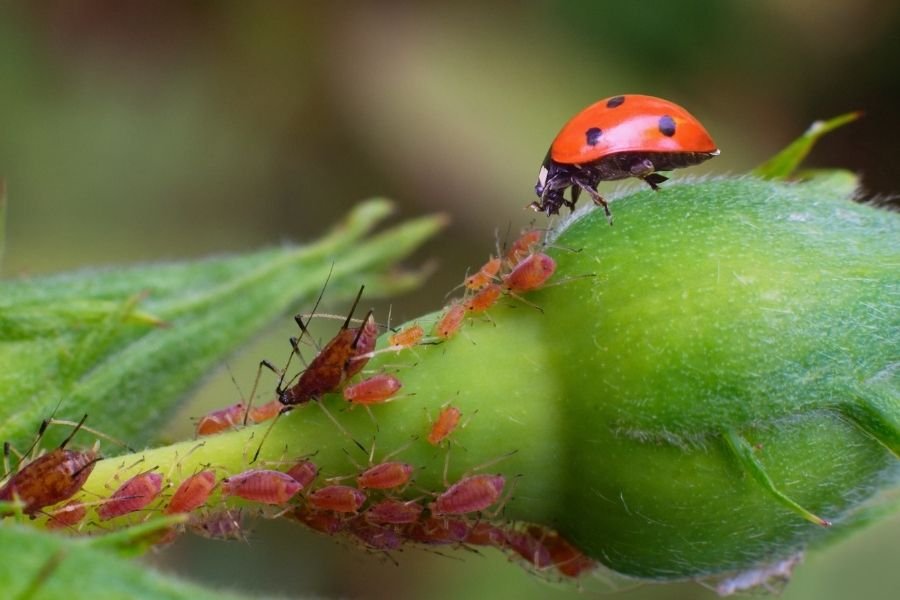
A bright red ladybug with black spots actively feeding on aphids on a flower blossom, surrounded by lush green foliage and photographed in warm afternoon light
A single ladybug larva consumes hundreds of aphids during development. Lacewing larvae attack thrips, whitefly eggs, and small caterpillars. Parasitic wasps lay their eggs inside aphids and caterpillars, killing them from the inside.
How to attract and retain beneficial insects:
Shop our Beneficial Insect Mix →
- Plant nectar and pollen sources: dill, fennel, cilantro allowed to flower, yarrow, and native wildflowers.
- Maintain some garden messiness: leaf litter, hollow stems, and undisturbed soil patches provide overwintering habitat.
- Avoid broad-spectrum pesticides during bloom.
- Purchase and release beneficial insects only if your garden already has pest populations to sustain them.
According to USDA Natural Resources Conservation Service guidance on beneficial insects, supporting populations of natural predators is a foundational principle of integrated pest management (IPM) and reduces the need for external inputs over time.
Bacillus thuringiensis (Bt) is a naturally occurring soil bacterium that produces proteins toxic to specific insect larvae, particularly caterpillars. It is non-toxic to beneficial insects, birds, mammals, and humans. Apply Bt as a foliar spray when caterpillar larvae are small and actively feeding.
Companion Planting for Pest Management
Companion planting works on two mechanisms: chemical deterrence and habitat diversification. Some plants emit volatile compounds that repel specific pests. Others attract beneficial insects that prey on those pests.
The most evidence-supported companion planting combinations include:
- Basil with tomatoes: Basil's volatile oils repel thrips and aphids while attracting pollinators.
- Nasturtiums as trap crops: Aphids are strongly attracted to nasturtiums, drawing them away from vegetables.
- Dill and fennel near brassicas: These plants attract parasitic wasps that target cabbage worms and aphids.
- Marigolds near squash and cucumbers: French marigolds deter nematodes and their flowers attract hoverflies whose larvae consume aphids.
- Alliums near carrots and roses: Onions, garlic, and chives deter aphids and carrot flies through sulfur compounds.
Companion planting requires density to work. Plant companions in clusters, at least three to five plants per species, to create the chemical gradients and insect habitat that make the strategy effective.
Physical Barriers, Preventative Maintenance, and Soil Health
Physical barriers are the most underused tool in organic pest control and the only truly preventative method.
Row cover (floating fabric): Lightweight spun fabric draped over crops and secured at the edges prevents flying insects from reaching plants entirely. It is the most reliable protection against squash vine borers, cabbage moths, and flea beetles. Remove covers during bloom if the crop requires pollination.
Copper tape: Slugs and snails receive a mild electrical charge when crossing copper, making it an effective barrier around raised beds and containers.
Sticky traps: Yellow sticky cards attract and trap whiteflies, fungus gnats, and thrips. They serve as excellent monitoring tools to track population trends.
Soil health as pest prevention is the most overlooked angle in pest control. Healthy soil supports strong plant immunity. Plants growing in biologically active, well-fed soil produce stronger cell walls and higher concentrations of secondary metabolites that make them less palatable to pests.
Practical soil health steps that reduce pest pressure:
- Add compost annually to support microbial diversity
- Avoid synthetic nitrogen fertilizers that produce soft, fast-growing tissue attractive to sucking insects
- Rotate crops to prevent soil-dwelling pest populations from building up
- Mulch to maintain moisture and support beneficial soil organisms
Organic Pest Control Timing: A Seasonal Application Guide
Timing is where most organic pest control efforts fail. The right product applied at the wrong time in the pest life cycle has little effect. This seasonal framework is calibrated for cold-climate gardens, zones 4 through 6.
As documented in Cornell Cooperative Extension integrated pest management program, monitoring pest populations and aligning treatments with pest life cycle stages is the defining principle of effective IPM.
Early Spring (soil temps 40-50°F):
- Apply beneficial nematodes to soil for grub control
- Set up yellow sticky traps to monitor for early aphid and whitefly activity
- Apply row covers to brassicas and cucurbits
Mid-Spring (soil temps 50-60°F):
- Begin weekly scouting for aphid colonies on new growth
- Apply neem oil at first sign of aphid or thrips pressure
- Direct-sow companion plants alongside vegetables
Late Spring (soil temps 60°F+):
- Watch squash stem bases daily for vine borer egg masses
- Apply Bt for caterpillar pressure on brassicas
- Release or encourage lacewings if aphid populations are climbing
Early Summer Transition:
- Treat for Japanese beetle grubs with milky spore or beneficial nematodes
- Shift from preventative neem oil to spot treatments only, to protect pollinator populations during peak bloom
Pet and Pollinator Safety Note:
Diatomaceous earth is safe for pets and wildlife but should not be applied to open flowers where bees forage. Neem oil is generally safe for pets once dry but toxic to fish and aquatic invertebrates. Pyrethrin is toxic to cats and should not be used in gardens where cats roam freely. Spinosad is highly toxic to bees when wet, apply only in the evening after foraging has stopped. These are not minor caveats.
Input | Safe for Pets? | Safe for Pollinators? | Application Window |
|---|---|---|---|
Neem Oil | Yes (when dry) | Yes (when dry) | Morning or evening |
Diatomaceous Earth | Yes | Avoid open flowers | Anytime (avoid bloom) |
Pyrethrin | No (toxic to cats) | No (toxic when wet) | Evening only, last resort |
Spinosad | Yes | No (toxic when wet) | Evening only |
Bt | Yes | Yes | Anytime larvae active |
Beneficial Nematodes | Yes | Yes | Soil application, spring |
Organic pest control for spring gardens rewards the gardeners who pay attention early and act proportionately. The integrated pest management approach, identify, monitor, intervene at the right moment, and protect beneficial insects throughout, consistently outperforms the reactive spray-and-hope method.
Firefly Farm and Mercantile carries heirloom and open-pollinated seed varieties selected for gardeners who care about what goes into their soil and onto their plants. If you are building a garden that works with natural systems rather than against them, start with seeds that have the genetic resilience to thrive in it. Shop our seed collections and seasonal bulbs to build your spring garden from the ground up.
Frequently Asked Questions
What is the most effective organic pesticide for spring gardens?
No single product works for every pest. Neem oil handles soft-bodied insects like aphids and whiteflies well, while Bacillus thuringiensis (Bt) targets larvae such as squash vine borers without harming beneficial insects. Diatomaceous earth works on crawling pests with exoskeletons. For organic pest control that actually holds, combining two or three of these methods within an integrated pest management approach outperforms relying on any one product alone.
Are organic pesticides safe for pollinators and pets?
Most organic options are safer than synthetic pesticides, but 'organic' does not mean harmless to all creatures. Pyrethrin, for example, is toxic to bees and fish even though it is plant-derived. Spinosad can harm pollinators if applied while flowers are open. To protect pollinators, apply foliar sprays at dusk when bees are not foraging. Diatomaceous earth and neem oil are generally lower-risk for pets, but keep animals away from treated areas until the product has dried completely.
When is the best time to apply organic pest control in spring?
Start monitoring as soon as soil temperatures climb above 50°F, which is when many pest eggs begin hatching. Apply preventative measures like row covers and companion planting at transplant time. Treat active infestations in the early morning or at dusk to reduce evaporation and protect pollinators. In colder climates with shorter seasons, early intervention matters more because plants have less time to recover from pest damage before the growing window closes.
How do I control pests in a vegetable garden without chemicals?
Combine several non-toxic strategies: hand-pick large pests like Japanese beetles into soapy water, introduce beneficial insects such as ladybugs and lacewings, use physical barriers like row covers over vulnerable crops, and plant pest-deterring companions like basil and marigolds nearby. Keeping soil healthy through compost and good drainage also strengthens plant immunity, making vegetables less attractive to pests in the first place. Consistent monitoring is the most important habit you can build.
Shop Best Sellers


